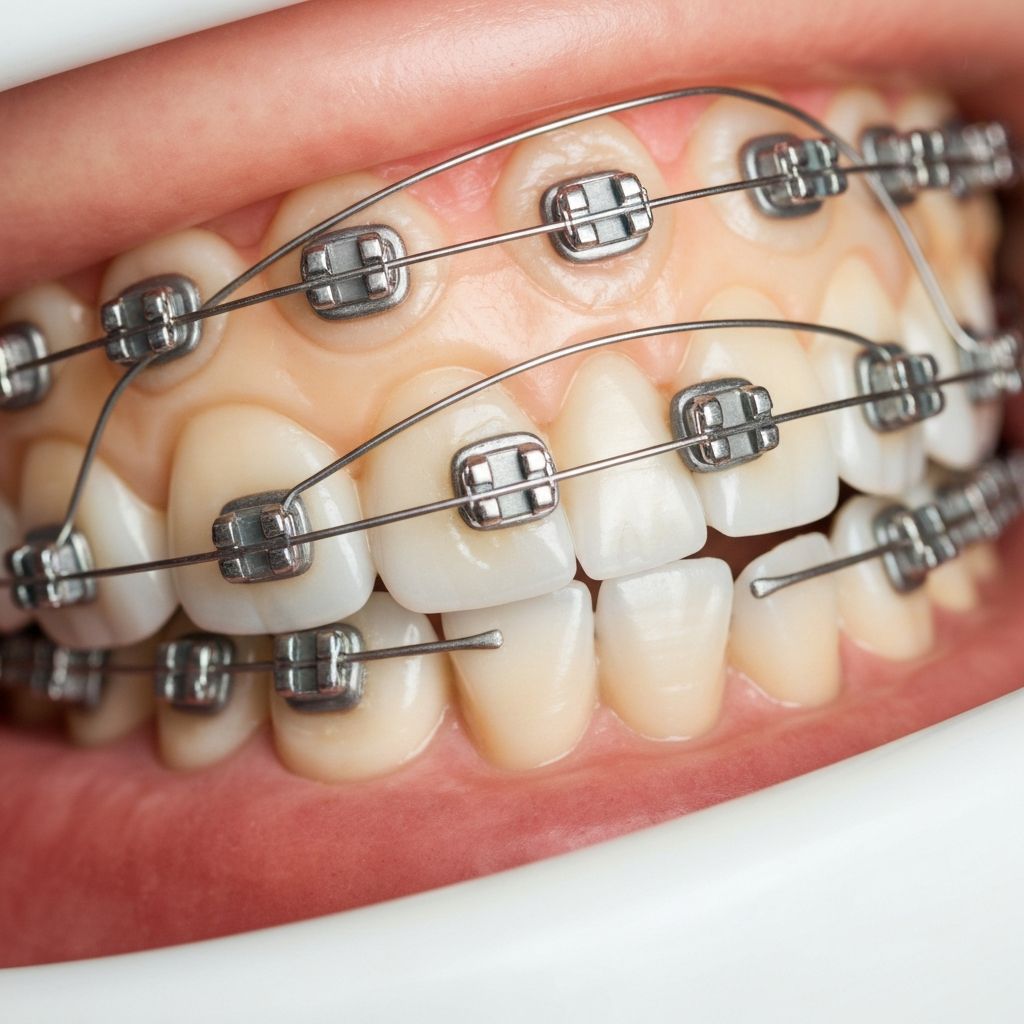
Deciding between traditional braces and Invisalign clear aligners is one of the most important choices in orthodontic treatment. Both options have proven effectiveness, but they differ significantly in appearance, comfort, cost, and lifestyle impact. Let's break down everything you need to know to make an informed decision.
Overview of Both Options
Traditional Braces:
Metal or ceramic brackets are bonded to each tooth and connected by wires that are regularly tightened to gradually move teeth into proper alignment.
Invisalign Clear Aligners:
A series of custom-made, removable plastic trays are worn sequentially, each slightly different from the last, to gradually shift teeth into correct positions.
Comprehensive Comparison
Appearance
| Aspect | Traditional Braces | Invisalign |
|---|---|---|
| Visibility | Clearly visible metal or ceramic brackets | Nearly invisible to others |
| Aesthetics | Can feel self-conscious, especially as adult | Maintains natural appearance |
| Customization | Available in colors/styles (ceramic options) | Completely transparent |
Comfort & Convenience
| Aspect | Traditional Braces | Invisalign |
|---|---|---|
| Initial Discomfort | Moderate, adapts within 1-2 weeks | Minimal, usually just pressure sensation |
| Mouth Sores | Common from bracket/wire friction | Very rare due to smooth trays |
| Removability | Permanent until removal | Removable for eating, brushing, special occasions |
| Maintenance | Difficult to clean (brackets trap food) | Easy to clean teeth and trays |
Treatment Duration
| Complexity | Traditional Braces | Invisalign |
|---|---|---|
| Mild Cases | 18-24 months | 2-3 months |
| Moderate Cases | 24-30 months | 6-12 months |
| Severe Cases | 30-36+ months | Not suitable (braces recommended) |
Cost Comparison
- Traditional Braces: ₹40,000 - ₹1,00,000+ depending on complexity and duration
- Invisalign: ₹1,50,000 - ₹3,00,000+ for more advanced cases
While Invisalign may seem more expensive upfront, the shorter treatment duration and fewer office visits can balance the costs.
When Braces Are Better
- Severe crowding or bite problems
- Complex tooth movements required
- Vertical bite adjustments needed
- Patient compliance concerns (Invisalign requires discipline to wear 20+ hours daily)
- Budget constraints
- Children and teenagers (more predictable results)
When Invisalign Is Better
- Mild to moderate crowding or spacing
- Aesthetic concerns (professional image matters)
- Adult patients valuing discretion
- Special events or presentations scheduled
- Active lifestyle (sports, martial arts)
- Excellent oral hygiene habits
- Commitment to wearing aligners consistently
Key Differences in Effectiveness
Braces Advantages:
- Can handle more complex cases
- Continuous pressure on teeth (24/7)
- Better for severe bite corrections
- No patient compliance risk
Invisalign Advantages:
- Faster results for simple cases
- Better oral hygiene maintenance
- More comfortable for most patients
- Predictable timeline with digital planning
Lifestyle Impact Comparison
Eating & Drinking:
Braces: Food restrictions (no sticky, hard, or crunchy foods); difficult to clean debris
Invisalign: No restrictions; simply remove aligners before eating/drinking
Social Activities:
Braces: Visible during social events, dating, and professional settings
Invisalign: Maintain appearance while straightening teeth
Sports & Activities:
Braces: Risk of bracket damage; mouth guards difficult to fit
Invisalign: Can remove during sports; easier to wear protective gear
Retention After Treatment
Both options require lifelong retention using retainers to prevent teeth from shifting back. Some patients prefer fixed retainers with Invisalign, while others use removable retainers with braces.
The Verdict: Which Should You Choose?
There's no universal "better" option - it depends on your specific situation:
- Choose Braces if: You have complex bite issues, need the most affordable option, or want guaranteed results regardless of compliance
- Choose Invisalign if: You have mild-moderate crowding, value aesthetics, maintain excellent oral hygiene, and can commit to wearing aligners consistently
What Our Doctors Recommend
At Balaji Dental Clinic, Dr. Suresh Kumar Sharma uses advanced diagnostic techniques to assess each patient's unique needs. During your consultation, we'll determine which option offers the best results for your specific case and lifestyle.
Conclusion
Both traditional braces and Invisalign are effective ways to achieve a straighter, healthier smile. The "better" choice depends on your specific orthodontic needs, aesthetic preferences, lifestyle, and budget. The most important step is scheduling a consultation with an experienced orthodontist who can evaluate your case and guide you toward the best treatment option.
Ready to transform your smile?
Schedule Your Free Consultation Today